A badly damaged or infected tooth can cause persistent pain, sensitivity and difficulty chewing. When the damage reaches the soft tissue inside a tooth, a dentist may discuss two very different treatments: saving the tooth through root canal treatment or removing it through extraction.
The root canal vs extraction decision depends on whether the tooth can be predictably restored, the condition of its roots and supporting bone, and your overall dental health. Both procedures may treat the source of pain or infection, but they have different implications for your bite, recovery and future dental care.
What Is Root Canal Treatment?
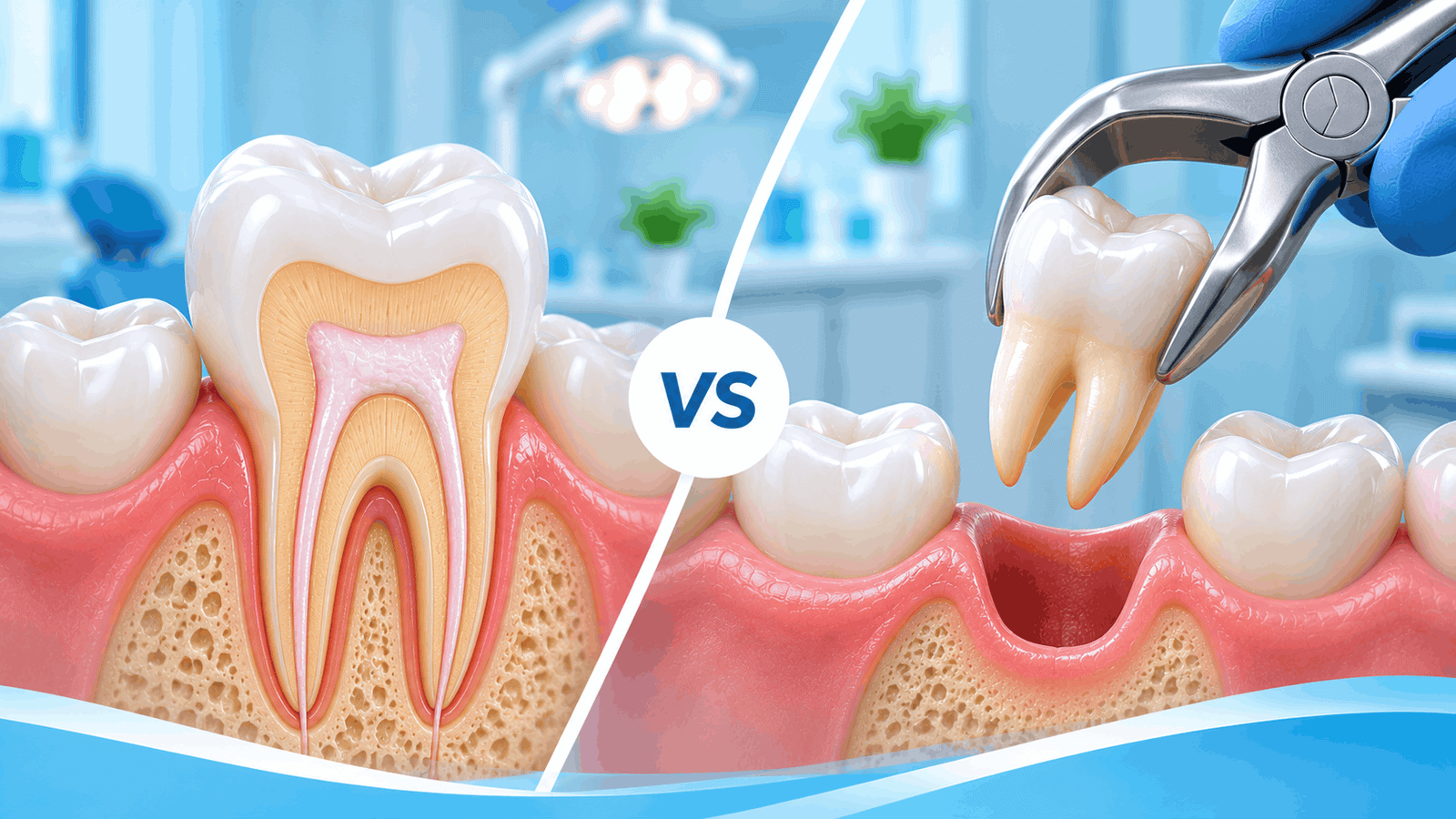
Root canal treatment, also called endodontic treatment, aims to retain a natural tooth whose pulp has become irreversibly inflamed or infected. The pulp contains nerves and blood vessels and may be damaged by decay, cracks or injury.
Under local anaesthetic, a dentist accesses the tooth, removes the affected pulp, cleans and disinfects the root canals, and fills and seals them. A filling or crown is then used to restore the tooth. Treatment often takes two or more appointments, depending on complexity.
Learn more about root canal treatment in Huddersfield and how the clinic assesses damaged or infected teeth.
What Is a Tooth Extraction?
A tooth extraction removes the whole tooth from its socket. Dentists may recommend removal when decay extends too far beneath the gumline, a root fracture makes the tooth unrestorable, severe gum disease has destroyed support, or previous treatment cannot provide a predictable outcome.
An extraction is generally performed with local anaesthetic. The technique depends on the tooth and root shape. The socket forms a blood clot and gradually heals. If a missing tooth will affect chewing or alignment, replacement options should be discussed.
Root Canal vs Extraction: What Are the Main Differences?
Saving the Natural Tooth
The principal difference in root canal vs extraction is preservation. Successful root canal treatment leaves the natural tooth in place, helping maintain existing chewing contacts and avoiding a gap. However, the remaining tooth must have enough sound structure and support to withstand long-term use.
Extraction removes the tooth permanently. It may be the safer, more practical choice when a tooth is too damaged to repair, but replacing a functional missing tooth can require further treatment.
Pain During Treatment and Recovery
In a root canal vs extraction comparison, both treatments should be manageable with local anaesthetic, although you may feel pressure. Root canal treatment is not inherently more painful than extraction. Tell the clinician if you experience discomfort so they can assess anaesthesia and provide appropriate care.
After a root canal, tenderness around the tooth may last for a few days. Following extraction, swelling, soreness and a healing socket are expected; discomfort is often greatest during the first few days. Severe or worsening pain needs dental review.
Treatment Time and Appointments
When comparing root canal vs extraction, an uncomplicated extraction may take fewer initial appointments. Root canal treatment commonly needs multiple visits, particularly for molars with complex canal systems, and a crown may be fitted afterwards.
However, extraction is not necessarily the shorter overall journey if a bridge, implant or denture is needed to restore the gap. Consider the complete treatment plan rather than the time spent in the dental chair.
Root Canal vs Extraction: Which Costs More?
An extraction may cost less initially than root canal treatment followed by a crown. Yet removing a tooth can create additional costs if you choose an implant, bridge or denture afterwards. Root canal fees also vary by tooth position, canal complexity and the restoration required.
For a meaningful root canal vs extraction cost comparison, ask for estimates covering follow-up visits and any replacement or restoration, rather than comparing the procedures alone. The clinic provides a dental treatment pricing guide, but individual costs require an examination.
When Is Root Canal Treatment Usually Preferred?
For root canal vs extraction, preservation may be appropriate when roots and supporting bone are healthy, the canals can be treated and enough tooth structure remains for a durable restoration. A dental crown may be recommended for a heavily restored back tooth to reduce the risk of fracture.
If you have persistent sensitivity, pain when biting or discolouration after injury, read our guide to signs you need a root canal. Symptoms provide clues, but X-rays, pulp tests and examination determine whether treatment is necessary and likely to succeed.
When Might Extraction Be the Better Option?
In some root canal vs extraction decisions, preservation is not realistic. Examples include a vertical root fracture, extensive decay that cannot be restored, or very poor periodontal support. Extraction may also be considered when repeated attempts to save a tooth have an unfavourable prognosis.
Ask whether referral to an endodontist could offer another option. No single rule applies to every damaged tooth.
What Happens After a Tooth Is Removed?
An important root canal vs extraction difference is the healing site: after removal, a blood clot protects the socket. Follow your dentist’s instructions, which commonly include avoiding vigorous rinsing or spitting during the first 24 hours and not smoking. Seek advice if bleeding will not stop, pain becomes severe after initially improving, or swelling worsens.
For a missing functional tooth, options can include a dental implant, a fixed dental bridge or dentures. Not every extracted tooth needs replacing; this depends on its position and the bite.
Can a Dental Abscess Be Treated Without Extraction?
Often, yes, if the affected tooth can be saved. A dental abscess is a collection of pus caused by infection and needs urgent dental assessment. Treatment may involve drainage and root canal treatment or extraction, depending on the source and condition of the tooth.
Our planned guide to dental abscess symptoms explains swelling, bad taste, toothache and other warning signs. Antibiotics alone do not reliably eliminate the source of dental infection.
Concerned about an infected or damaged tooth? Contact Crosland Moor Dental Clinic to discuss an assessment. For severe swelling, persistent pain or suspected infection, see the clinic’s emergency dental care information. If swelling affects breathing or swallowing, call 999 or attend A&E.
Frequently Asked Questions
Root Canal vs Extraction: Which Heals Faster?
Initial discomfort after root canal treatment often settles within days, while an extraction socket needs time to heal and may require more precautions at first. Healing varies with the infection, procedure and individual health.
Can You Have a Root Canal on a Badly Broken Tooth?
Sometimes, provided the tooth has enough sound structure for restoration and the crack does not make it unrestorable. Your dentist may recommend a crown or another restoration after treatment.
Is Extraction Always Necessary for an Infected Tooth?
No. Root canal treatment can sometimes remove infection while preserving the tooth. Extraction is considered when treatment is unsuitable or unlikely to give a lasting result.
Conclusion
In the root canal vs extraction comparison, retaining a restorable natural tooth is often worthwhile, but extraction can be necessary when damage is too extensive. The best decision considers infection, tooth strength, long-term function, overall costs and your preferences.
For personalised advice, arrange an appointment with Crosland Moor Dental Clinic in Huddersfield or call 01484 654438.