A missing tooth can make chewing uncomfortable and affect your smile. Two common fixed replacements are dental implants and dental bridges. Both fill the gap but use different supporting structures.
When comparing dental implants vs bridges, the decision is not simply about which looks more natural. The health of adjacent teeth, available jawbone, treatment time, maintenance,e and cost all matter. These differences can guide your discussion with a dentist.
What Are Dental Implants?
A dental implant is a small, usually titanium, fixture surgically placed into the jawbone to replace a missing tooth root. After the surrounding bone heals and integrates with the fixture, an abutment and custom-made crown can be attached. Several implants may also support a bridge replacing multiple teeth.
Because an individual implant does not usually depend on neighbouring teeth for support, it can replace a missing tooth without preparing healthy adjacent teeth. However, implantation requires suitable bone and healthy surrounding tissues, and surgery is involved.
You can read more about dental implants in Huddersfield and the assessment process on the clinic’s treatment page.
What Is a Dental Bridge?
A dental bridge is a fixed restoration that spans the space left by one or more missing teeth. The replacement tooth is called a pontic. In a conventional bridge, crowns fitted over teeth on either side of the gap hold the pontic in place.
The supporting teeth, known as abutment teeth, normally need some enamel removed to accommodate those crowns. A resin-bonded bridge is different: it uses a bonded wing on a neighbouring tooth and may require little or no drilling.
The clinic’s dental bridges in Huddersfield page explains the available fixed tooth replacement approaches.
Dental Implants vs Bridges: The Main Differences
Effect on Neighbouring Teeth
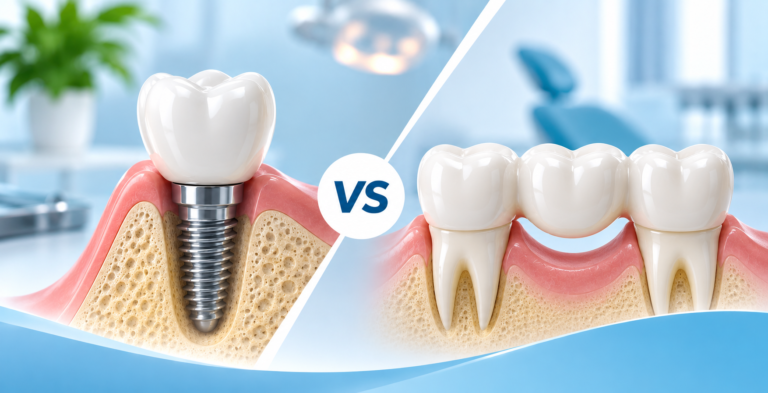
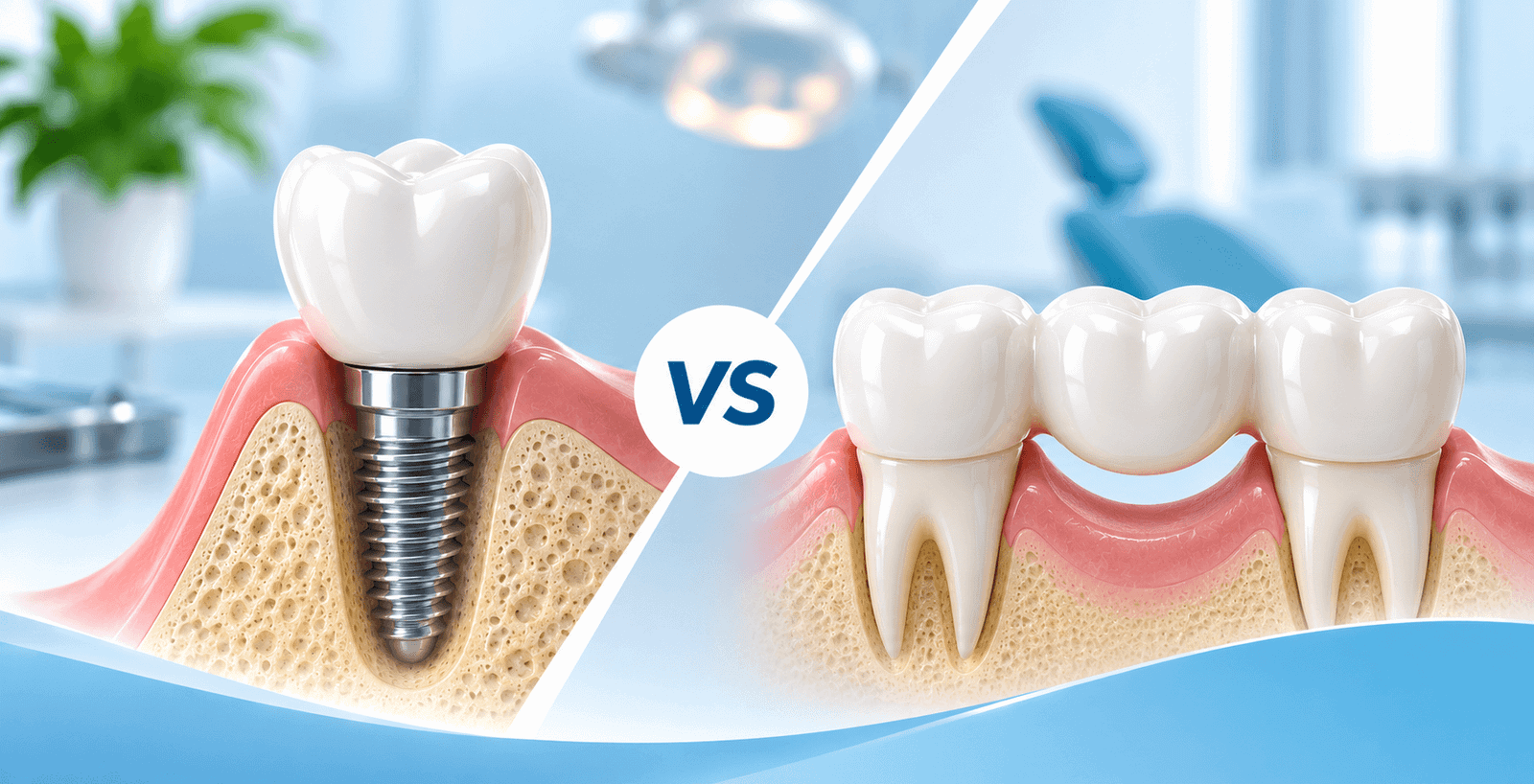
The biggest practical difference is the way each restoration is supported. A single implant usually stands independently in the jawbone, which can preserve otherwise healthy neighbouring teeth.
A conventional bridge relies on adjacent teeth, so preparing them is an irreversible step. If those teeth already have large fillings or need crowns, a bridge may offer a useful way to restore them at the same time. Resin-bonded bridges can sometimes reduce the amount of preparation required.
Jawbone Health
Bone in an area where a tooth has been lost may gradually shrink. An implant transfers some chewing forces to the surrounding jawbone and can help maintain bone around the fixture.
A conventional tooth-supported bridge replaces the visible tooth but not its root. As a result, changes in the bone beneath the pontic may continue. Implants do not prevent all bone loss, and insufficient bone may mean additional procedures are needed.
Comfort, Chewing and Appearance
In the dental implants vs bridges comparison, both are fixed restorations that can restore biting, speech, and appearance. An implant-supported crown often feels stable because it is anchored in bone, while a well-designed bridge can also feel secure and natural.
Appearance depends on tooth colour, gum levels, restoration shape,e and bite.
How Does the Treatment Process Compare?
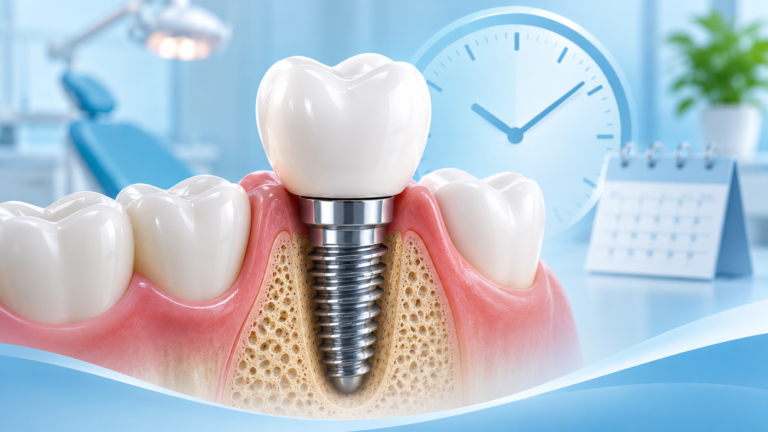
With dental implants vs bridges, treatment time can be a deciding factor. Implant treatment begins with an oral examination and imaging to check bone volume, gum health and the position of nearby anatomical structures. The implant is placed under local anaesthetic, followed by a healing period that often lasts several months. A crown is then fitted once the implant is ready to support it.
A conventional bridge is usually completed more quickly. The dentist prepares the supporting teeth if needed, takes impressions or digital scans, and fits a temporary restoration when appropriate. The finished bridge is then checked and bonded or cemented into position.
Dental Implants vs Bridges: Which Costs More?
Implants generally cost more at the outset because they require surgical placement, specialist components, ts and a final restoration. A conventional bridge can have a lower initial price, although costs increase with the number of units, materials and complexity.
The condition of supporting teeth matters when considering longer-term value. A bridge could require treatment or replacement if an abutment tooth develops decay or gum problems. Implant crowns may also need repair or replacement, and implants themselves can develop complications.
For local estimates, the clinic provides a dental treatment pricing guide. A personalised quotation is more useful than comparing advertised starting prices alone.
How Long Do Dental Implants and Bridges Last?
There is no guaranteed lifespan for either restoration. Implants may last for decades with healthy surrounding tissues and consistent care, but infection, smoking, uncontrolled medical conditions, and excessive biting forces can affect outcomes. The crown attached to an implant may need replacing even when the implant remains sound.
A well-maintained bridge can also last for many years. Its longevity depends partly on the strength of its supporting teeth and how effectively plaque is removed around the margins and underneath the replacement tooth.
If you are wondering how long dental implants last, a separate guide can explain the factors that affect their longevity in greater detail.
How Do You Clean and Maintain Each Option?
Cleaning is essential in any dental implants vs bridges decision. Implant crowns need brushing around the gumline and cleaning between the teeth using tools recommended by a dentist. Regular reviews help detect inflammation around the implant early.
Bridges also need careful cleaning, particularly underneath the pontic, where food and plaque can collect. Floss threaders, bridge floss or interdental brushes may help reach areas that ordinary floss cannot.
Regular examinations remain important because both restorations can develop problems.
Which Treatment Might Be Suitable for You?
An implant may be appropriate when the neighbouring teeth are healthy, there is enough jawbone to support it, and the patient is suitable for surgery. A bridge may be preferable if the adjacent teeth already need crowns, surgery is unsuitable, or a shorter treatment process is important.
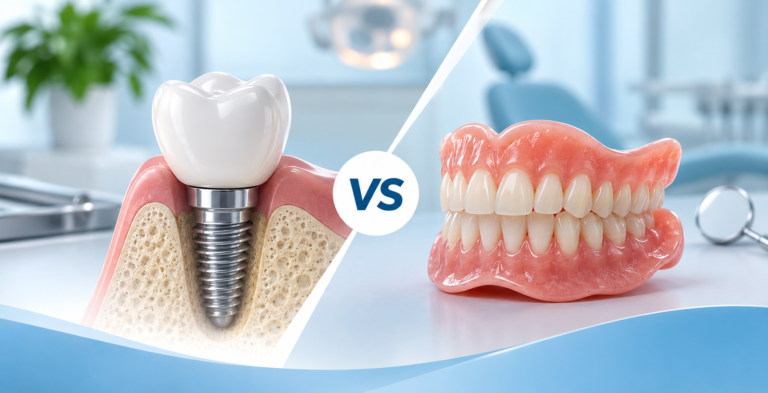
Dental implants and bridges are not the only possibilities. Removable dentures may be considered when several teeth are missing or when a fixed option is unsuitable. Our related article on dental implants vs dentures discusses that choice.
Considering a replacement for a missing tooth? The team at Crosland Moor Dental Clinic can assess the gap, supporting teeth, gums, and bite before explaining the available options. Arrange a dental consultation for individual advice.
Can Dental Implants Support a Bridge?
Yes. The phrase dental bridge vs implant can be misleading because the two treatments sometimes work together. When several teeth are missing, an implant-supported bridge can span a gap using implants as its anchors rather than natural teeth.
Whether this is possible depends on the position of the missing teeth, bone support,t and how chewing forces will be distributed. It requires careful clinical planning.
Conclusion
In the dental implants vs bridges comparison, neither treatment is universally better. Implants can replace a tooth without preparing healthy adjacent teeth, while bridges offer a fixed solution that may be quicker and can make use of teeth already needing restoration.
The best option depends on your dental health, treatment goals and budget. For an individual assessment, contact Crosland Moor Dental Clinic in Huddersfield or call 01484 654438.