Toothache, sensitivity and swollen gums can be difficult to interpret. Symptoms may develop gradually or follow an injury. Not every painful tooth needs root canal treatment, and some infected teeth cause no obvious pain.
Understanding the signs you need a root canal can help you recognise when a dental examination is important. Only a dentist can establish the cause and recommend treatment.
What Causes a Tooth to Need Root Canal Treatment?
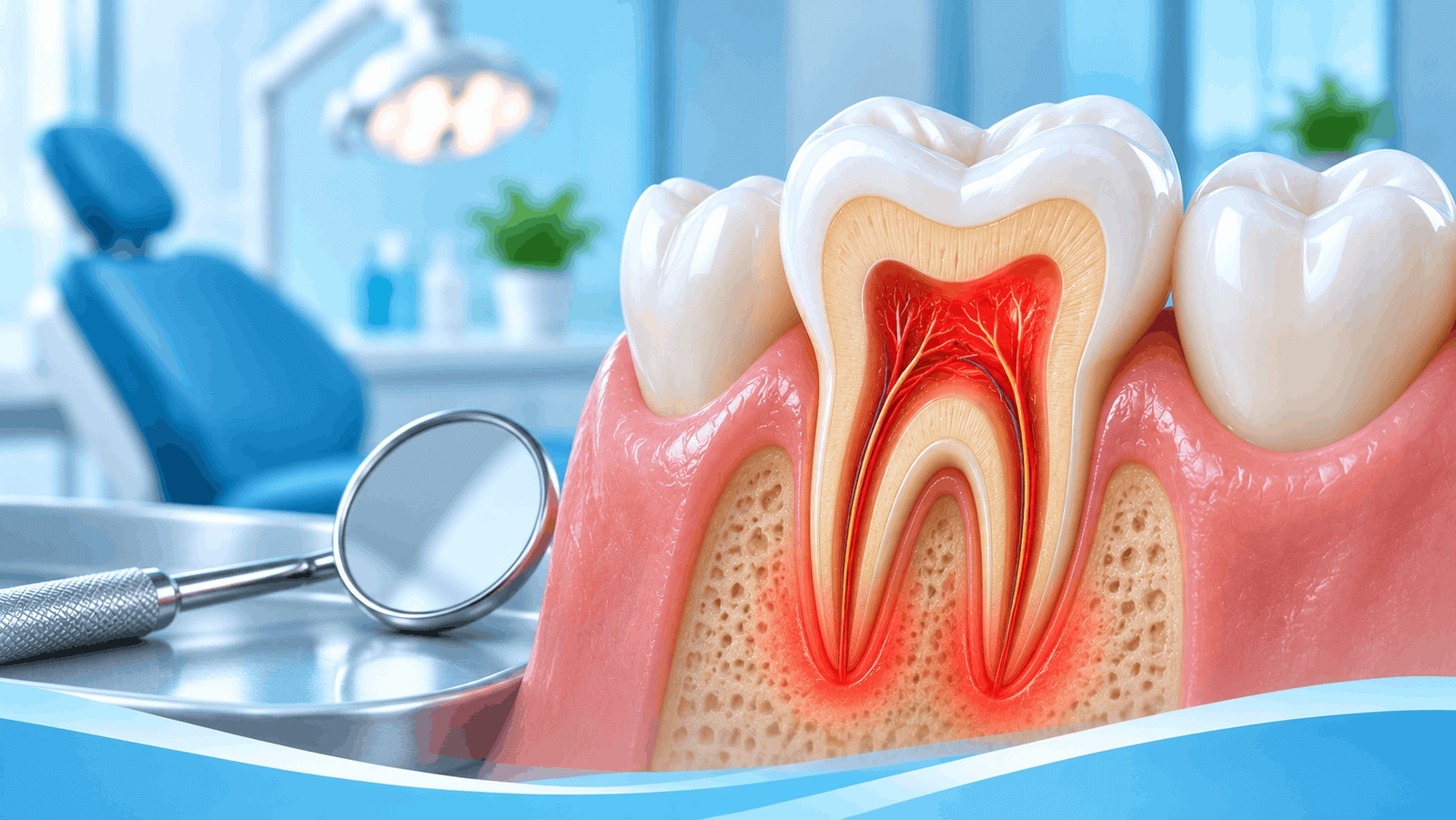
Inside each tooth is pulp containing nerves and blood vessels. Deep decay, a crack or an injury can damage this tissue. Sometimes it recovers; in other cases, inflammation is irreversible or the pulp dies.
Root canal treatment removes damaged pulp, disinfects the canals and seals the tooth. The signs you need a root canal often reflect inflammation inside the tooth or infection around the root, but symptoms alone cannot establish a diagnosis.
Seven Possible Signs You Need a Root Canal
1. Persistent or Spontaneous Toothache
Pain that starts without a trigger, repeatedly returns or disrupts sleep can indicate pulp inflammation. It may throb or be difficult to locate. Cracks, gum disease and other conditions can cause similar pain, so examination is essential.
2. Sensitivity That Lingers After Hot or Cold Drinks
Brief sensitivity can occur with exposed dentine or decay. Pain continuing after a hot or cold drink is removed can be associated with irreversible pulp inflammation. Among the signs you need a root canal, lingering temperature sensitivity is worth mentioning specifically when you describe your symptoms to a dentist.
3. Pain When Biting or Chewing
Inflammation around the root can make chewing uncomfortable. A crack, high filling or gum problem can cause similar pain, so a dentist must identify the source.
4. Swollen Gums or a Small Pimple Near a Tooth
A tender swelling or spot on the gum releasing fluid may indicate an infection around a root. You may also notice a bad taste. These can be signs you need a root canal or another form of urgent dental treatment. An abscess needs prompt assessment even if swelling improves.
Our upcoming guide to dental abscess symptoms will explain these warning signs in more detail.
5. A Tooth Becoming Darker After Injury
A tooth turning grey after a knock may indicate pulp damage, even months later. Discolouration does not always mean the pulp is dead, but a dentist should assess it.
6. Deep Decay, a Large Filling or a Cracked Tooth
Deep decay or a fracture can expose the pulp. You may notice a broken edge, trapped food or sensitivity before severe pain develops. These findings are not automatically signs you need a root canal; the extent of damage and whether the pulp can recover determine the treatment.
7. Facial or Jaw Swelling With Tooth Pain
Facial or jaw swelling, especially with fever, can indicate spreading infection and requires urgent assessment. Treatment might involve drainage, root canal treatment or extraction. Difficulty breathing, swallowing or speaking requires emergency medical help.
Can You Need a Root Canal Without Tooth Pain?
Yes. A non-vital tooth may stop hurting while infection remains around the root. Sometimes the problem is discovered on an X-ray, so absence of pain does not exclude disease.
Equally, having one or more signs you need a root canal does not mean the procedure is inevitable. A reversible problem might be treated with a filling, while a tooth that cannot be restored may need extraction.
How Does a Dentist Confirm Whether Root Canal Treatment Is Needed?
Your dentist will ask about symptoms and examine for decay, cracks and gum problems. Tests may include gentle tapping, biting, cold sensitivity and X-rays.
These findings are considered together. If the pulp is irreversibly inflamed or infected and the tooth can be restored, your dentist may recommend root canal treatment in Huddersfield. Diagnosing the cause is more reliable than relying on a checklist of the signs you need a root canal.
What Happens During Root Canal Treatment?
A local anaesthetic is normally used to keep you comfortable. The dentist opens the tooth, removes affected pulp, cleans and shapes the root canals, then seals them with a filling material. Treatment commonly takes two or more appointments.
A heavily damaged tooth may need a dental crown afterwards to help restore its strength and function. Your dentist will explain the plan and risks.
Root Canal vs Extraction: Which Is Better?
If a tooth is restorable, root canal treatment may allow it to remain in place rather than being removed. Extraction may be needed when a tooth is severely fractured, has too little supporting structure or cannot be successfully treated. The choice depends on prognosis and your preferences.
Our upcoming guide to root canal vs extraction will compare both options in more detail. If you are noticing signs you need a root canal, ask your dentist to explain whether the tooth is realistically saveable rather than assuming extraction is the quickest answer.
When Should You Seek Urgent Dental Help?
A suspected abscess, severe persistent toothache or worsening swelling needs urgent advice. The clinic’s emergency dental care page explains how to seek an appointment. If you cannot access a dentist, NHS 111 offers urgent dental advice in England.
Call 999 or go to A&E if swelling makes it hard to breathe, swallow or speak, or if you have severe swelling around the mouth or eye, or sudden vision problems. These situations must not wait for an ordinary dental appointment.
Worried about tooth pain or swelling? Contact Crosland Moor Dental Clinic for an assessment, or call 01484 654438. The team can explain appropriate next steps.
What Can You Do While Waiting for an Appointment?
Avoid chewing on the affected side or foods that trigger pain. Brush gently. Paracetamol or ibuprofen may provide temporary relief if suitable; follow packet instructions and consult a pharmacist if uncertain. Never try to drain swelling yourself.
Painkillers may ease symptoms, but they do not treat a dental infection. Antibiotics do not replace treatment of the infection source.
Frequently Asked Questions
Are the Signs You Need a Root Canal Always Painful?
No. Infected teeth can cause little pain, and other conditions mimic these symptoms. Diagnosis requires testing.
Can the Signs You Need a Root Canal Disappear on Their Own?
Pain may ease if the pulp dies or an abscess drains, but infection can remain. Seek assessment.
Do All Cracked Teeth Need Root Canal Treatment?
No. Depending on crack depth and pulp health, treatment may involve a filling, crown, root canal or extraction.
Conclusion
Recognising the signs you need a root canal—including persistent toothache, lingering sensitivity and swelling—can prompt timely care. Only an examination can determine the correct treatment.
For a personalised assessment, contact Crosland Moor Dental Clinic in Huddersfield or call 01484 654438.