A missing tooth can affect chewing, appearance and nearby tooth positions. Bridges and implants are two fixed replacements, but they use different supporting structures.
The dental bridge vs implant decision is particularly important when only one tooth is missing. Neighbouring teeth, jawbone, bite and suitability for surgery all influence the decision.
What Is a Dental Bridge?
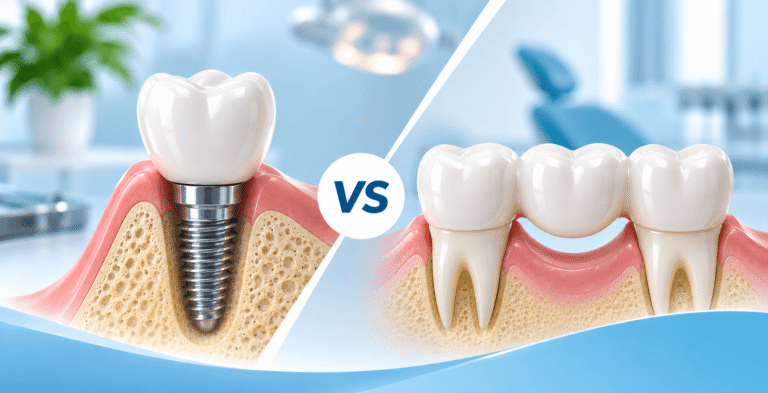
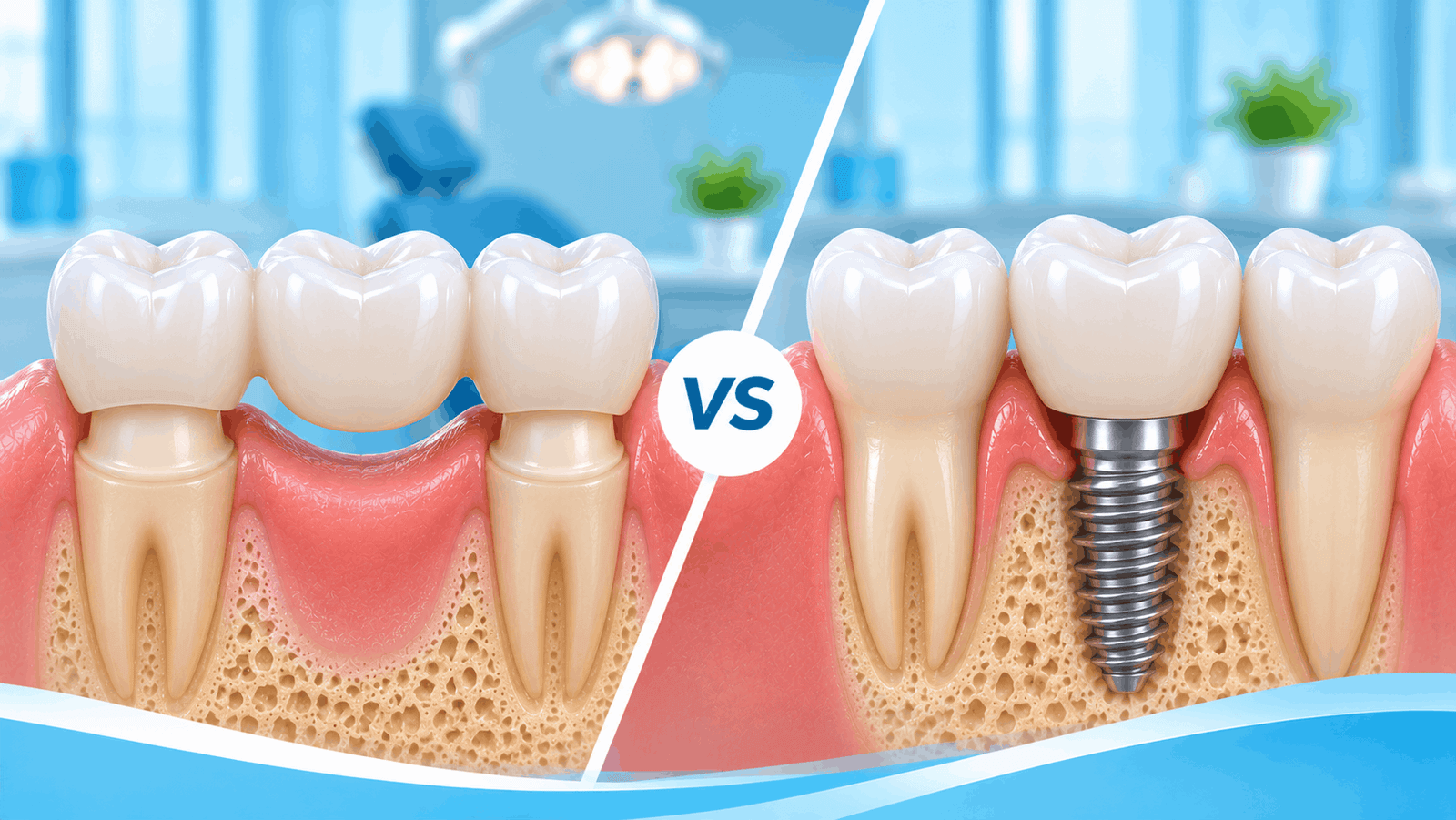
A dental bridge replaces a missing tooth with an artificial tooth called a pontic. A conventional bridge uses crowns on neighbouring teeth for support, which usually requires reshaping them.
Resin-bonded bridges use a wing attached to a neighbouring tooth, sometimes with minimal drilling. Design depends on the gap, bite and supporting teeth.
You can explore the clinic’s dental bridge treatment in Huddersfield for more information about fixed bridges.
What Is a Dental Implant?
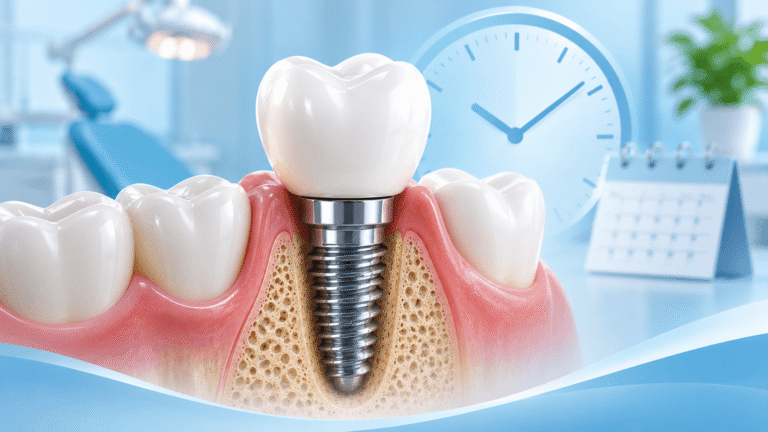
A dental implant is a titanium fixture placed surgically into the jawbone to support a crown, bridge or denture. A replacement crown can be fitted after the implant integrates with bone.
For a single gap, an implant-supported crown usually avoids the need to reshape otherwise healthy adjacent teeth. Treatment requires sufficient bone, healthy tissues and careful planning. Find out more about dental implants in Huddersfield.
Dental Bridge vs Implant: What Matters for a Single Missing Tooth?
Condition of the Neighbouring Teeth
In a dental bridge vs implant comparison, neighbouring teeth are often the deciding factor. If the teeth beside the gap are sound and untreated, an implant can provide an independent replacement without preparing them for crowns.
If an adjacent tooth already has a large filling or needs a crown, a conventional bridge may be reasonable. A resin-bonded bridge can also be considered where the bite and enamel make it suitable. Ask what healthy tooth tissue would be removed.
Jawbone and Gum Health
After tooth loss, the bone beneath the gap may gradually shrink. Implants transfer some chewing forces to the bone around them, helping preserve local support, although they cannot prevent every type of bone loss.
A tooth-supported bridge replaces the visible tooth but does not replace its root. Bone changes beneath a bridge may continue; implant placement may require grafting when bone is insufficient.
Chewing and Appearance
Both options can look natural and feel secure when properly designed. A fixed bridge distributes biting forces through its supporting teeth, while an implant crown transfers them through the implant and surrounding bone. Grinding or an uneven bite can damage either restoration.
The dental bridge vs implant decision should account for your chewing pattern, smile line and the condition of the gum tissue, not just the visible replacement tooth.
Dental Bridge vs Implant: Which Treatment Takes Longer?
A conventional bridge may be fitted over a few appointments after the dentist prepares the supporting teeth and takes impressions or digital scans. A temporary bridge may be fitted meanwhile.
Implant treatment usually takes longer. Assessment and imaging come first, followed by surgery and a healing period that often lasts several months. Additional bone treatment, if necessary, can extend the process.
Healing after extraction can delay either treatment.
Dental Bridge vs Implant: How Do Costs Compare?
An implant normally has a higher initial cost because surgery, imaging, implant components and a custom crown are involved. A bridge can cost less initially, but the price depends on its design, materials and the condition of the supporting teeth.
Long-term costs also matter. A bridge may need replacing if a supporting tooth develops decay or other problems. An implant crown may need repairs, while implants can develop complications requiring professional treatment. See the clinic’s dental treatment pricing page for starting prices.
In the UK, clinically necessary bridges may be available through NHS dentistry in suitable circumstances. Implants are usually provided privately, with limited NHS exceptions.
How Long Does Each Replacement Last?
There is no guaranteed lifespan in the dental bridge vs implant comparison. A well-maintained bridge may function for many years, but success depends on the health of its supporting teeth and gums. Decay under crown margins or a loose bridge can require further treatment.
Implants can last decades, though their crowns and other components may need maintenance. Our related guide explains how long do dental implants last and the factors affecting durability.
Dental Bridge vs Implant: Cleaning and Maintenance
Both treatments need brushing twice daily, cleaning between teeth and regular dental reviews. With a bridge, cleaning beneath the pontic is particularly important; bridge floss, floss threaders or interdental brushes may help reach the space underneath.
For an implant crown, careful cleaning around the gumline helps reduce plaque and inflammation. Your dentist can recommend suitable tools. Routine general dentistry appointments can help monitor your remaining teeth, gums and restorations.
Poor hygiene can threaten either option.
Who Might Be Better Suited to Each Option?
When discussing dental bridge vs implant, an implant may be a useful option if neighbouring teeth are healthy, there is suitable jawbone and surgery is appropriate. Smoking, uncontrolled diabetes, active gum disease and certain medicines can affect risks and require an individual assessment.
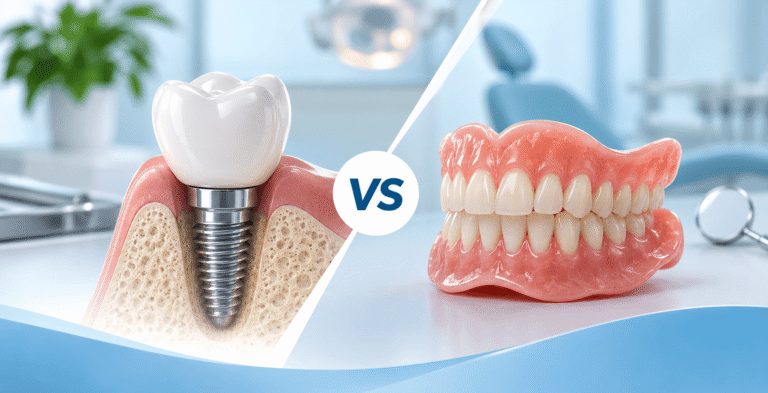
A bridge may be preferable if adjacent teeth already require crowns, you wish to avoid surgery, or implant placement is not suitable. A removable denture may also be considered in some circumstances. Our guide on dental implants vs dentures explains how fixed and removable replacements differ.
Unsure how to replace a single missing tooth? Contact Crosland Moor Dental Clinic for an assessment of the gap, neighbouring teeth, gums and jawbone before choosing treatment.
Can Dental Implants Support a Bridge?
Yes. A bridge does not always have to rest on natural teeth. Where several teeth are missing, implants can support a fixed bridge, avoiding the need for one implant per replacement tooth in some treatment plans.
This is different from replacing one tooth. Implant positions require careful planning.
Frequently Asked Questions
Dental Bridge vs Implant: Which Is Less Invasive?
A bridge generally avoids implant surgery but may involve permanently preparing neighbouring teeth. An implant needs surgery but usually leaves those teeth untouched. A resin-bonded bridge may involve less drilling than a conventional bridge.
Can I Replace a Bridge With an Implant Later?
Sometimes. Your dentist must assess the existing teeth, space and bone levels first.
Is a Bridge Better if I Need a Tooth Quickly?
A bridge may be quicker, although healing and oral health affect timing. Temporary replacements may help.
Conclusion
The best choice in a dental bridge vs implant comparison depends on the neighbouring teeth, jawbone health, treatment time, maintenance needs and budget. A bridge can restore a gap without implant surgery, while an implant may replace one tooth without preparing healthy neighbours.
For advice tailored to your mouth, arrange a consultation with Crosland Moor Dental Clinic in Huddersfield or call 01484 654438.