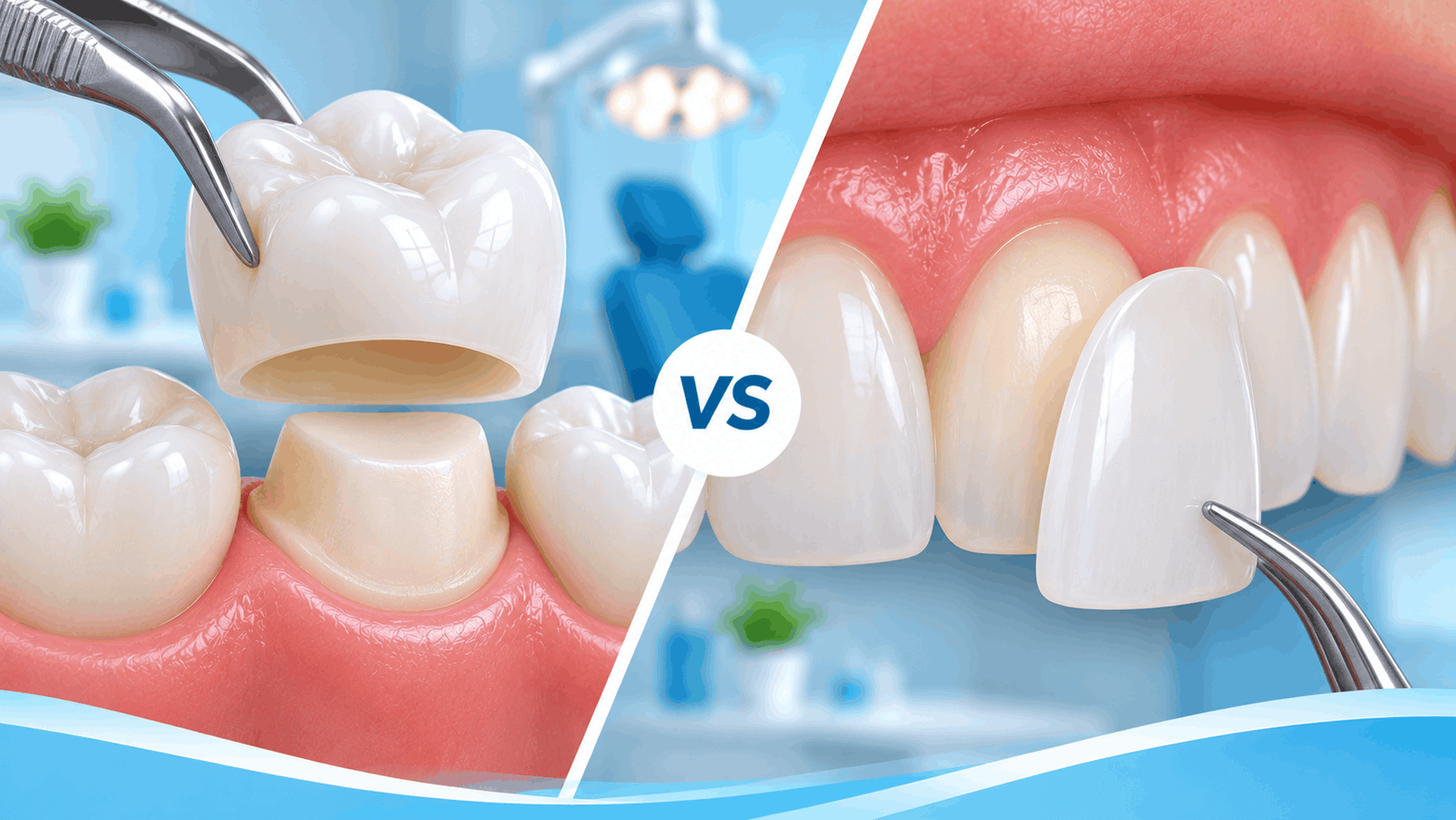
A chipped, worn or discoloured tooth may affect how your smile looks and how comfortably you bite. Dental crowns and veneers can both improve appearance, but they are designed for different problems. A crown surrounds a tooth, while a veneer usually covers only its visible front surface.
When comparing dental crown vs veneer, the most important question is how much healthy tooth remains. Damage, bite pressure and tooth preparation all influence the recommendation.
What Is a Dental Crown?
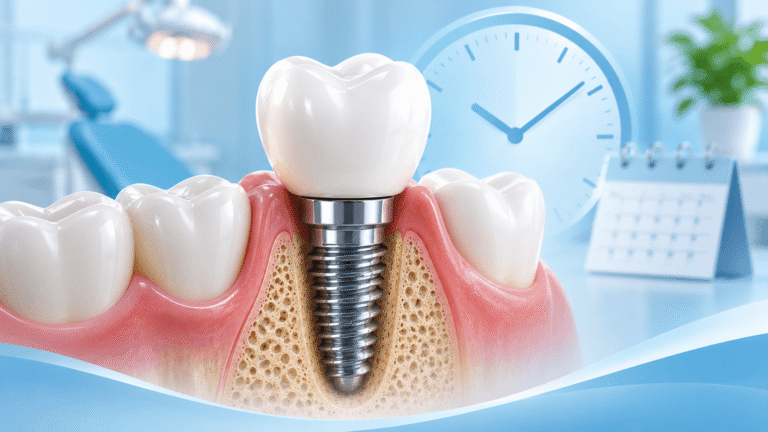
A dental crown is a custom-made cap that covers all or most of the visible portion of a natural tooth. Crowns restore shape, support chewing and provide protection when a tooth has been weakened by extensive decay, a large filling or fracture. They may also be recommended after root canal treatment, particularly for heavily restored back teeth.
Crowns are made from materials including ceramic, porcelain and metal alloys. The dentist reshapes the tooth so the restoration fits. Learn more about dental crowns in Huddersfield and when they may be appropriate.
What Is a Dental Veneer?
A veneer is a thin layer of material bonded to the front surface of a tooth, commonly to improve colour, shape or minor imperfections. Porcelain veneers are usually made in a dental laboratory, while some composite veneers are built directly onto teeth using tooth-coloured resin.
Veneers can address minor chips, uneven edges, small spaces or discolouration. They cannot reliably rebuild teeth with major structural damage. The clinic explains its veneers and composite bonding options for patients in Huddersfield.
Dental Crown vs Veneer: The Main Differences
How Much of the Tooth Is Covered?
In a dental crown vs veneer comparison, coverage is the defining difference. A crown encircles the tooth and can restore a weakened biting surface. A veneer is primarily attached to the front surface, leaving much of the remaining tooth uncovered.
Crowns restore weakened teeth; veneers are more commonly used for cosmetic changes to healthy teeth.
Tooth Preparation and Enamel Removal
Both treatments can require permanent tooth preparation. A crown typically needs more reshaping because it must fit around the tooth. A porcelain veneer generally requires less enamel removal, though the exact amount depends on alignment, shade and design. Some additive composite treatments require little or no enamel removal.
When choosing dental crown vs veneer, remember that removed enamel does not grow back. Ask whether a more conservative treatment is possible.
Appearance, Strength and Chewing
Ceramic crowns and porcelain veneers can resemble natural enamel. Colour, tooth shape and gum levels influence appearance.
Crowns can restore a damaged chewing surface, but they do not make the underlying tooth immune to decay or fractures. Veneers can look natural on front teeth, but biting hard objects or grinding can damage them. Neither should be chosen on appearance alone.
Dental Crown vs Veneer: How Does Treatment Work?
For a crown, the dentist examines the tooth and may take X-rays. After removing decay and preparing the remaining structure, impressions or digital scans are used to make a custom restoration. A temporary crown may protect the prepared tooth until the final crown is fitted and cemented.
For porcelain veneers, the dentist first assesses enamel, gum health and bite. The front tooth surface may be prepared and a scan or impression sent to a laboratory. The final veneer is checked for colour and fit before bonding. Direct composite bonding may be completed during one visit.
The dental crown vs veneer timeline depends on material and case complexity.
Dental Crown vs Veneer: Cost and Long-Term Maintenance
Cost varies with materials, tooth position and the treatment required. On the clinic’s dental pricing page, porcelain crowns and porcelain veneers are both listed from £550, while composite veneers or bonding start from £200 per tooth. These are starting prices.
Both can last for years, without any guaranteed lifespan. Crowns can loosen or develop decay at their margins; veneers may chip, debond or need replacement. Brush twice daily with fluoride toothpaste, clean between teeth and attend routine dental check-ups. A protective night guard may be advised if you grind your teeth.
When Might a Crown Be More Suitable?
A crown may be considered for a broken tooth, extensive decay, large existing fillings or a tooth weakened by previous treatment. Where a tooth has had root canal treatment, a crown may help protect it when enough sound structure remains.
However, not every root-filled tooth needs a crown. Tooth position, remaining structure and bite all matter. If you are comparing dental crown vs veneer for a significantly damaged tooth, function and restorability are likely to be more important than the cosmetic finish.
When Might a Veneer or Bonding Be More Suitable?
A veneer may suit a healthy front tooth with discolouration, uneven shape or a small cosmetic defect. If only a minor chip needs repairing, composite bonding may be a more conservative alternative.
Our related guide to composite bonding vs veneers compares these cosmetic treatments. Another article, how long does composite bonding last, explains repairs, staining and upkeep. A dentist can determine whether either approach would preserve more natural tooth than a crown.
Unsure which restoration is appropriate? Contact Crosland Moor Dental Clinic to arrange an examination and discuss whether a crown, veneer or less extensive treatment may suit your tooth.
What About Teeth Whitening Before Veneers or Crowns?
Whitening lightens natural enamel but does not change the shade of existing ceramic crowns or veneers. When cosmetic work is planned, whitening may be considered first, followed by a period to allow tooth colour to settle before a final restoration is matched.
Our guide to how long does teeth whitening last discusses fading and maintenance. When weighing dental crown vs veneer, coordinating shade and treatment order can help avoid an obvious colour difference between natural and restored teeth.
Frequently Asked Questions
Dental Crown vs Veneer: Which Lasts Longer?
Both can last many years. Longevity depends on preparation, material, bite, cleaning and the condition of the tooth underneath. Neither has a guaranteed expiry date, and both may require repair or replacement.
Can a Veneer Replace a Crown on a Damaged Tooth?
Not always. A veneer may be unsuitable if extensive tooth structure has been lost or the tooth needs protection during chewing. Your dentist must assess how much sound tooth remains.
Is a Crown Always Better After Root Canal Treatment?
No. Back teeth with substantial structural loss often benefit from cuspal coverage, but the appropriate final restoration depends on the particular tooth and its bite.
Conclusion
The best choice in a dental crown vs veneer comparison depends on the condition of the tooth, not just appearance. Crowns can restore and protect weakened teeth, while veneers usually make more conservative cosmetic changes to healthy front teeth.
For individual guidance, arrange a dental consultation at Crosland Moor Dental Clinic in Huddersfield or call 01484 654438.