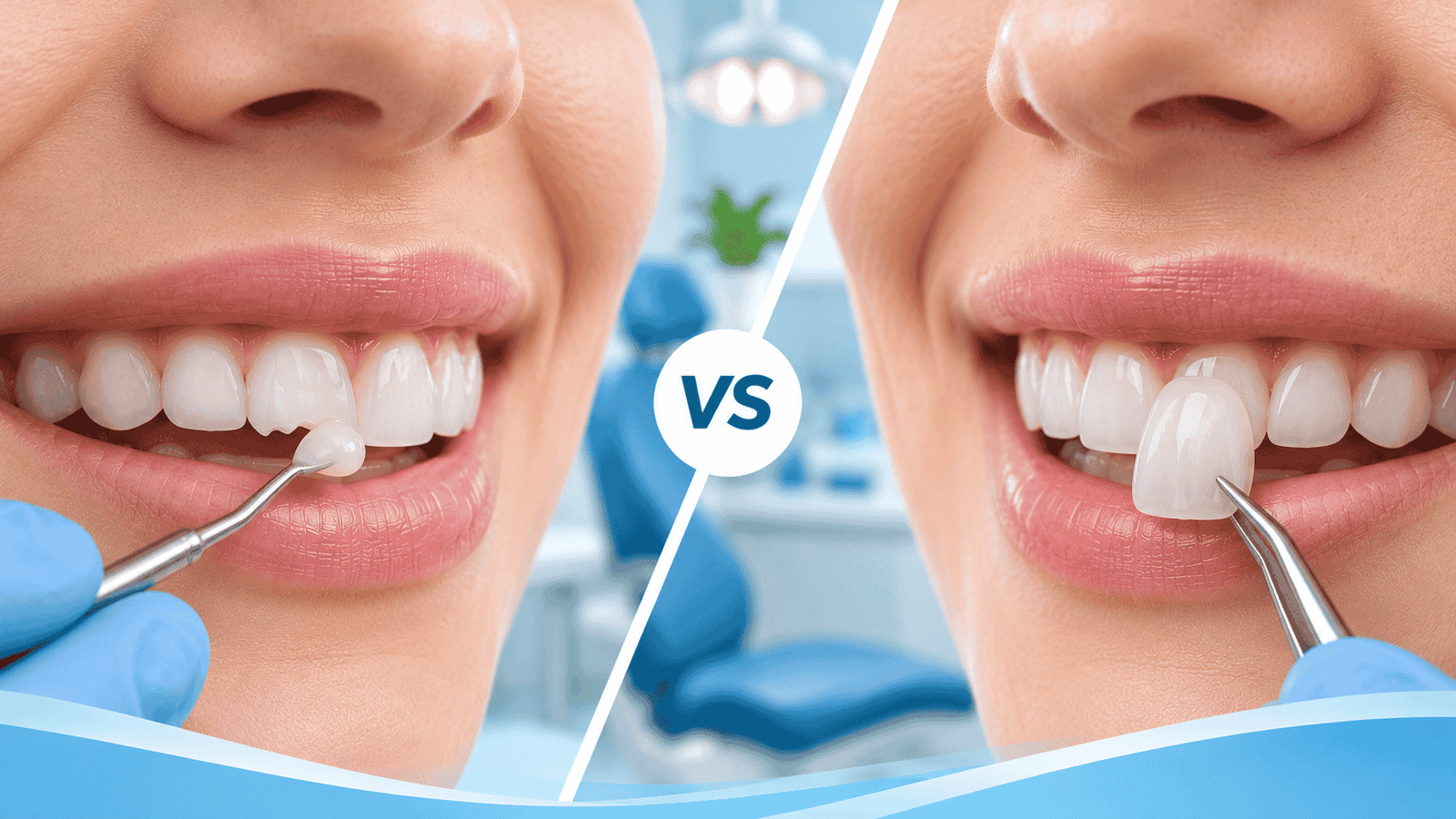
A chipped tooth, small gap or uneven edge can affect your smile. Composite bonding and veneers can improve these concerns without replacing the entire tooth. Yet they differ in materials, preparation, durability and cost.
When considering composite bonding vs veneers, it helps to understand what each procedure changes and what maintenance it involves. Neither treatment is automatically better: the right choice depends on the condition of your enamel, the size of the change you want and your dentist’s assessment.
What Is Composite Bonding?
Composite bonding involves applying tooth-coloured resin directly to a tooth. The dentist selects a shade, prepares the surface, adds and sculpts the composite, then hardens it with a curing light. The material is polished to blend with neighbouring teeth.
Bonding often works well for small chips, narrow gaps, uneven edges and modest changes to tooth shape. It can usually be completed in one appointment and may require little or no removal of healthy enamel. Resin can stain, chip or wear, requiring polishing or repair.
What Are Dental Veneers?
A veneer is a thin facing bonded to the front surface of a tooth to change its shape, colour or overall appearance. Veneers may be made from porcelain or composite resin. In discussions of composite bonding vs veneers, the comparison usually means direct composite bonding versus laboratory-made porcelain veneers; composite veneers themselves use a form of bonding.
Porcelain veneers are custom-made to improve tooth proportions, stubborn discolouration and some cosmetic gaps. A small amount of enamel is commonly removed to create space, although preparation varies by case. Because enamel does not grow back, the implications of preparation should be discussed before treatment.
Explore the clinic’s veneers and composite bonding treatments to understand the options available in Huddersfield.
Composite Bonding vs Veneers: Main Differences
How Much Natural Tooth Is Changed?
Tooth preservation is a key part of the composite bonding vs veneers decision. Direct bonding is commonly additive: resin is attached to the existing surface, with minimal preparation where possible. This makes it suitable for many small cosmetic corrections.
Porcelain veneers often need some enamel reshaping so the finished tooth does not look bulky. That preparation is irreversible, although not every veneer requires the same amount. A dentist should assess enamel and oral health first.
Appearance, Colour and Stain Resistance
Both can look natural when the shade, contours and surface texture are carefully matched to surrounding teeth. Porcelain generally keeps its colour and surface shine better than composite resin. Composite can gradually pick up stains from coffee, tea, red wine or smoking and may benefit from professional polishing.
The composite bonding vs veneers choice is also affected by what you want to change. A small chipped corner may need only local bonding, whereas broader changes across several front teeth may justify considering veneers. Results depend on technique, bite and tooth condition.
Strength, Repairs and Lifespan
Porcelain veneers generally resist wear and staining better, although they can still chip, crack or detach. Composite is easier to add to or repair in many cases, but it may need attention sooner. Crosland Moor Dental Clinic gives approximate lifespans of five to seven years for composite veneers and ten to fifteen years or longer for porcelain veneers with good care. These are estimates, not guarantees.
For readers comparing composite bonding vs veneers, remember that longevity depends on oral hygiene, grinding habits, restoration size and regular reviews. Our upcoming guide to how long does composite bonding last will examine maintenance and lifespan in greater detail.
Composite Bonding vs Veneers: How Does Treatment Work?
A composite bonding appointment typically begins with a dental examination and shade selection. The clinician prepares the enamel, applies an adhesive, builds up layers of resin, cures the material and polishes the finished surface. Many straightforward repairs are completed in one visit without an injection, although this varies.
Porcelain veneers usually involve an assessment, tooth preparation if required, scans or impressions, and fabrication by a dental laboratory. The dentist then checks the veneer for fit and colour before bonding it permanently. Temporary veneers may be used between visits. In the composite bonding vs veneers comparison, porcelain typically involves more appointments and a greater treatment commitment.
Composite Bonding vs Veneers: What About Cost?
Bonding usually has the lower initial price because it is sculpted directly onto the tooth. Porcelain veneers involve laboratory fabrication and additional clinical stages, making them more expensive in many cases. Compare prices per tooth and what each quote includes.
According to the clinic’s current dental treatment pricing, composite veneers or bonding start from £200 per tooth and porcelain veneers from £550 per tooth. Your exact cost depends on the treatment plan. Both are generally private cosmetic treatments in the UK.
Who Is Suitable for Bonding or Veneers?
Healthy teeth and gums are important before cosmetic work begins. Small chips, minor gaps and uneven edges may be well suited to bonding. Veneers may be considered where more extensive changes to the visible front surface are needed and enough sound tooth structure remains.
However, composite bonding vs veneers is not the right comparison for every problem. Significant crowding may be better addressed with orthodontics, while a heavily damaged or weakened tooth might need a dental crown instead. Grinding, decay and gum disease also affect suitability.
Thinking about improving a chipped or uneven tooth? A dental assessment can clarify which changes are possible and whether treatment is appropriate. Contact Crosland Moor Dental Clinic to discuss your options.
Composite Bonding vs Veneers: What About Teeth Whitening?
Whitening lightens natural teeth but does not change the colour of existing composite resin or porcelain. If whitening is part of your plan, dentists may recommend doing it first and allowing the shade to settle before matching new cosmetic restorations.
The clinic explains its options for professional teeth whitening. Our planned article on how long does teeth whitening last will cover why results vary and how to maintain them. Planning treatment order can prevent colour mismatches.
How Do You Care for Bonding and Veneers?
After either treatment, brush twice daily with fluoride toothpaste, clean between teeth and attend routine dental checks. Avoid using your front teeth to open packaging or bite hard objects, and mention clenching or grinding to your dentist. A protective night guard may be advised in selected cases.
For composite bonding vs veneers, maintenance differs slightly: bonded resin may need polishing or local repairs, while porcelain may require replacement if significant damage occurs. Seek advice for rough, loose or painful restorations.
Conclusion
Choosing between composite bonding vs veneers depends on the size of the cosmetic change, the condition of your teeth and how much preparation you are comfortable with. Bonding is often a conservative, repairable option for smaller changes, while porcelain veneers may offer longer-lasting colour stability for wider aesthetic improvements.
For personalised guidance, arrange a cosmetic dental consultation at Crosland Moor Dental Clinic in Huddersfield or call 01484 654438.