Crooked, crowded, or widely spaced teeth can affect your smile, bite, and ability to clean between teeth. Orthodontic treatment moves teeth gradually into improved positions, but the right appliance depends on your dental needs and daily routine. Two options are transparent aligners and fixed braces.
When comparing Invisalign vs braces, consider more than appearance. Treatment suitability, the amount of movement required, wear habits, cost, cleaning, and retention all matter. Both can work well when planned and professionally supervised.
What Is Invisalign and How Does It Work?
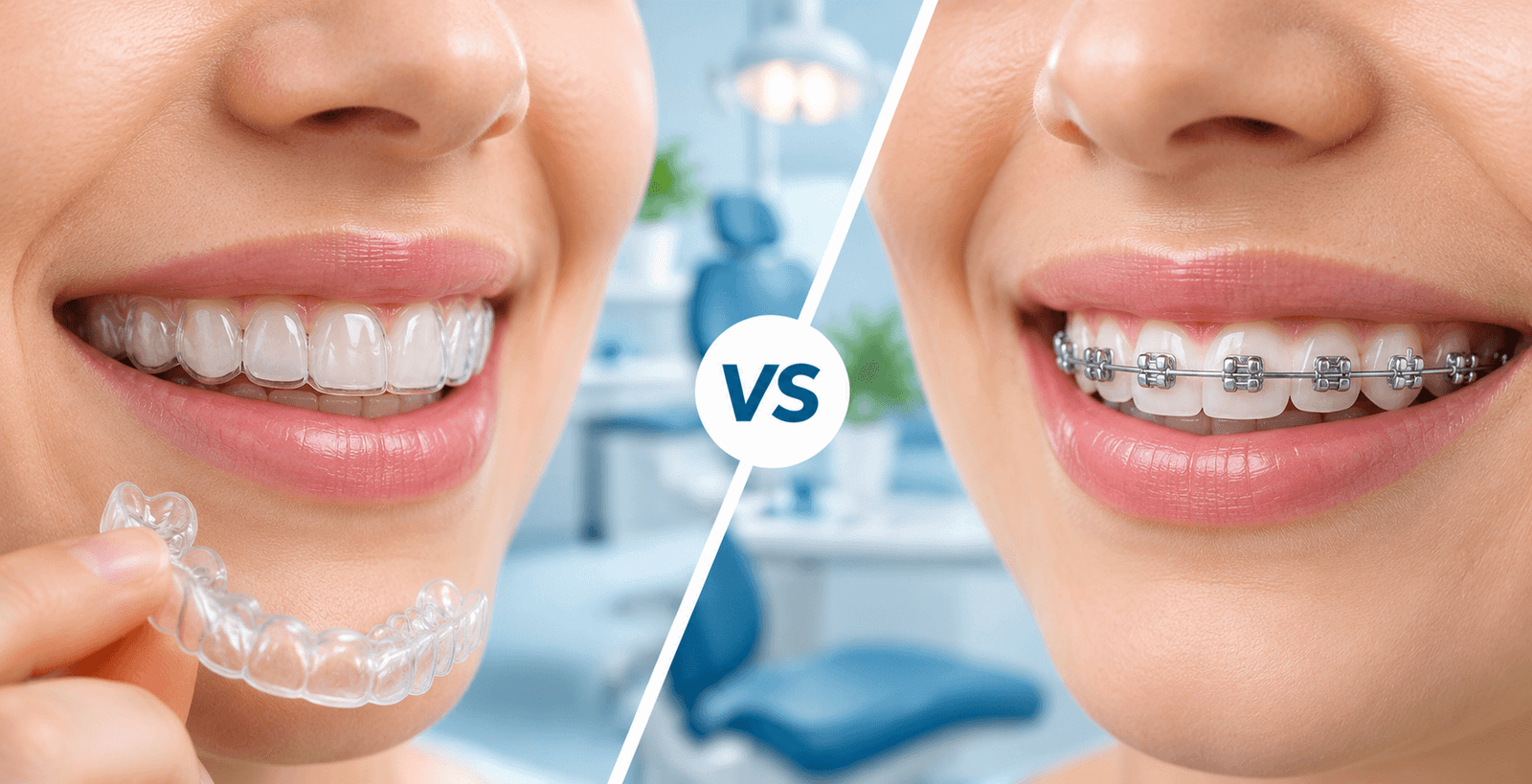
Invisalign is a brand of clear, removable orthodontic aligners. A series of custom-made plastic trays fits over the teeth, applying controlled pressure to move them incrementally. A clinician examines your teeth and bite, plans movements using scans or impressions, and monitors progress.
Aligners are usually worn for around 20–22 hours daily, removed mainly for meals, drinks other than water,r and cleaning. Tooth-coloured attachments may be needed for particular movements. Crosland Moor Dental Clinic offers clear aligners and Invisalign in Huddersfield, alongside its Nuvola aligner option.
What Are Traditional Braces?
Fixed braces use brackets attached to the teeth and a connecting archwire to move teeth over time. The clinician adjusts or replaces parts of the appliance at intervals to guide tooth movement. Brackets may be metal or tooth-coloured.
Because fixed braces cannot be taken off by the patient, they work continuously without depending on remembering to wear trays. They can offer greater control for certain complex movements, including cases involving significant crowding, extractions, or difficult bite corrections. Braces still require careful brushing, dietary precautions, and regular appointments.
Invisalign vs Braces: Differences in Appearance and Comfort
For people who prefer discreet orthodontic treatment, clear aligners are less noticeable than conventional metal brackets. Attachments may still be visible up close, and some patients need additional components. Fixed ceramic braces are another less noticeable option, although they remain attached to the teeth.
Comfort in the Invisalign vs braces decision varies. New aligners can cause temporary pressure or mild speech changes, while braces may rub against the lips or cheeks, particularly after fitting and adjustments. Both involve some soreness as teeth move. Neither appliance should cause persistent severe pain; contact your treating clinician if it does.
Invisalign vs Braces: Which Works Better for Crowding and Bite Problems?
The effectiveness of Invisalign vs braces depends on the type and complexity of the problem. Clear aligners are often effective for mild to moderate spacing, crowding, and selected bite issues. More complex movements, significant jaw discrepancies, or cases needing extraction may be better managed with fixed braces or a combined treatment plan.
An examination is essential because straight-looking front teeth do not necessarily mean the bite is healthy. The British Orthodontic Society recommends proper assessment rather than choosing by appearance alone.
Invisalign vs Braces: Which Treatment Is Faster?
Treatment duration depends on how far teeth must move, the complexity of the bite,e and whether the planned movements track as expected. Some mild aligner cases take only months; more involved treatments may take considerably longer. Fixed braces frequently remain in place for roughly one to two years, although individual courses can be shorter or longer.
There is no reliable rule that one appliance always works faster. Aligners may need extra sets, known as refinements, if teeth do not follow the original plan. Failing to wear them for the prescribed hours can also delay treatment.
If you are asking how long Invisalign takes, our upcoming article will explain typical timelines and the factors that influence them in more detail.
Invisalign vs Braces: Eating, Drinking and Cleaning
An everyday advantage of Invisalign is that you remove the trays to eat. You can generally enjoy your usual foods, but aligners should be taken out for meals and hot drinks, then teeth cleaned before reinsertion. Leaving trays out for extended periods reduces wear time.
With fixed braces, hard, sticky, and very crunchy foods can damage brackets or wires. Cleaning around brackets takes extra attention, using a toothbrush and interdental tools. Aligners are easier to remove for brushing and flossing, but the trays themselves also need cleaning. In either case, neglecting oral hygiene can lead to gum inflammation, decay,y or white marks on tooth enamel.
The clinic’s general dentistry service covers examinations and preventive dental care that help maintain oral health during treatment.
Invisalign vs Braces: What About Cost?
Prices vary according to treatment complexity, provider, appliance, and the number of visits or refinements required. Invisalign can cost more than some conventional metal-brace plans, but this is not universally true. A meaningful comparison should consider what the quotation includes, such as reviews, retainers and any additional treatment.
Crosland Moor Dental Clinic lists clear aligners, including Invisalign and Nuvola, from £995 on its treatment pricing page. This is an aligner starting price, not a quote for every Invisalign case or for fixed braces. Ask for an individual treatment plan before deciding.
Do You Need Retainers After Treatment?
Yes. Whether you choose Invisalign vs braces, teeth can shift again after active orthodontic treatment. Retainers help keep them in their corrected positions. Your clinician will explain whether a removable or bonded retainer is appropriate and how often it should be worn.
Skipping retention can lead to relapse, even after successful treatment. Long-term follow-up and good oral hygiene therefore remain important beyond the final aligner or removal of brackets.
Who Should Choose Invisalign or Fixed Braces?
Invisalign vs braces is ultimately a clinical and lifestyle decision. Invisalign may appeal to people who want a discreet removable option and can reliably wear their aligners as instructed. Fixed braces may be more suitable when movements are complex or remembering daily wear would be difficult.
An orthodontic assessment should also consider healthy gums, untreated decay, existing restorations and previous dental injuries. If treatment is suitable, the clinician can explain expected benefits, limitations and possible risks before you agree to proceed.
Thinking about straightening your teeth? Explore the clinic’s clear aligner treatment options or request an assessment to discuss whether Invisalign could suit your smile.
Frequently Asked Questions
Invisalign vs Braces: Which Is More Comfortable?
Some patients find smooth aligner trays easier on their cheeks than brackets and wires, but both treatments can cause temporary pressure as teeth move. Comfort varies with appliance design and individual sensitivity.
Can Invisalign Fix Every Bite Problem?
No. Aligners are useful for many cases, but some complex bite and tooth movements may need fixed braces or other orthodontic techniques. A clinician must assess the specific problem.
Are Results Permanent With Either Option?
No treatment prevents all future tooth movement. Wearing retainers according to professional instructions is important after both aligner and brace treatment.
Conclusion
In the Invisalign vs braces comparison, neither is automatically the best option. Invisalign offers a discreet, removable approach, while fixed braces can provide valuable control for more complex orthodontic cases. Treatment planning, consistent care and retention matter more than choosing an appliance by appearance alone.
To learn about the clear aligner options available locally, contact Crosland Moor Dental Clinic in Huddersfield or call 01484 654438 for an individual assessment.