Dental implants are designed to replace missing teeth with a stable restoration supported by the jawbone. Long-term care matters just as much as the initial procedure.
How long do dental implants last? Many implants remain functional for decades, but no dentist can promise a lifetime result. The health of the surrounding gums and bone, daily oral hygiene, smoking, medical conditions, and biting forces all affect longevity. Understanding them helps you protect your oral health.
How Long Do Dental Implants Last on Average?
There is no fixed expiry date for an implant. Leeds Teaching Hospitals NHS Trust explains that approximately 90% of implants placed ten years earlier are still present and functional. That is a benchmark, not a prediction for every patient. A functioning implant may still need treatment or repairs.
When people ask how long dental implants last, it is important to separate implant survival from the lifespan of the crown, bridge, or denture attached to it. Each component has different maintenance needs.
What Parts of a Dental Implant Can Wear Out?
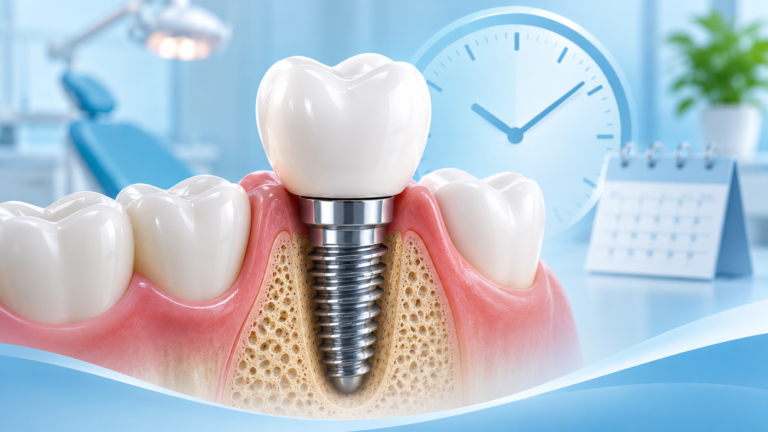
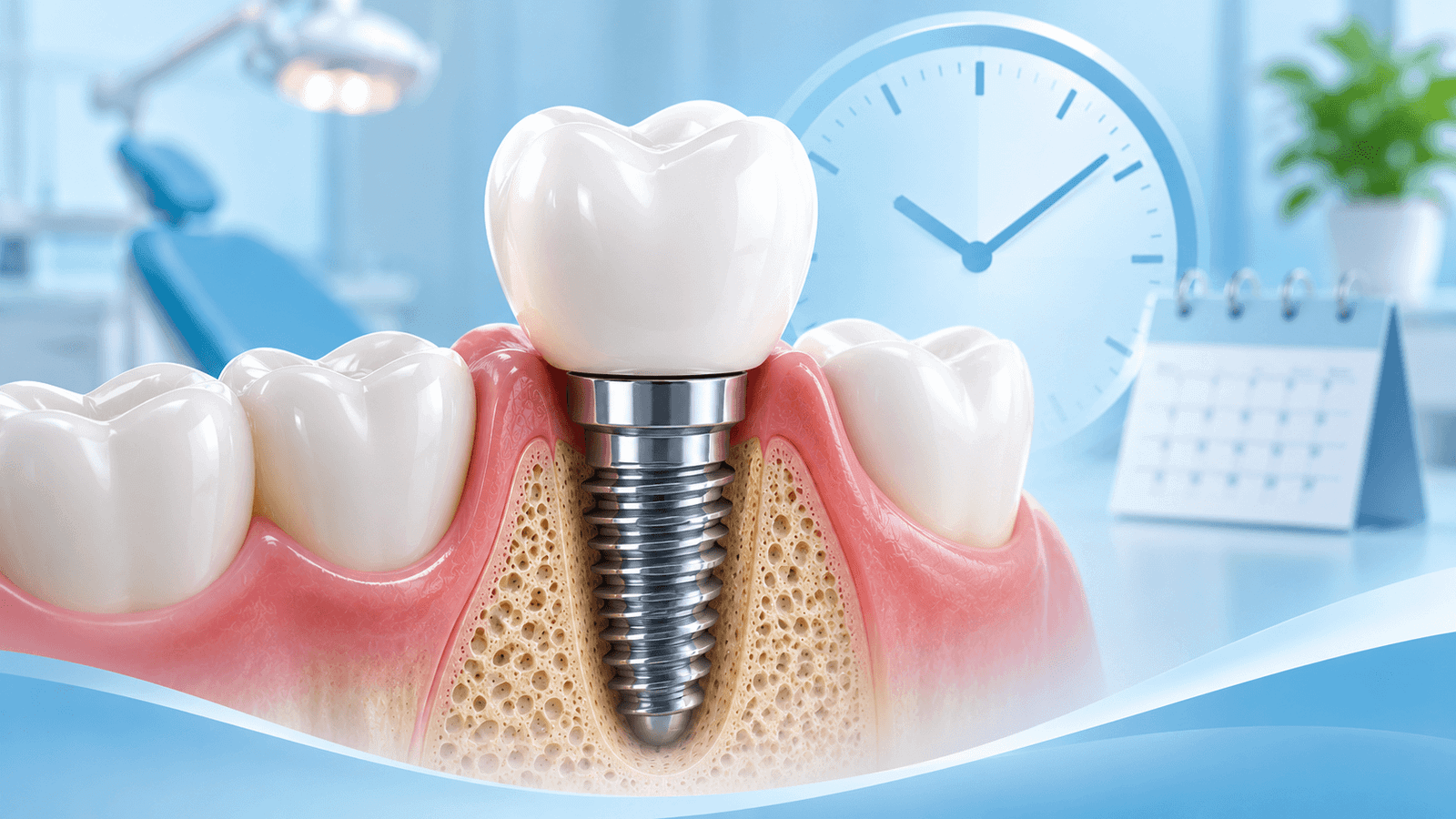
An implant restoration usually has three elements: a fixture positioned in the jawbone, a connecting abutment,t and a replacement tooth. The fixture becomes supported by bone through a healing process called osseointegration. The visible crown is exposed to normal chewing, changes in the bite, te and accidental damage.
A crown may chip, loosen, or need replacement even when the underlying implant remains healthy. Screws or other components can also wear. So, how long do dental implants last compared with implant crowns? The fixture may function for considerably longer than the restoration it supports, although individual outcomes vary.
You can learn about the assessment and treatment process on our dental implants in Huddersfield page.
What Affects Dental Implant Lifespan?
Gum Health and Peri-Implant Disease
Plaque can collect around implant-supported teeth just as it does around natural teeth. Inflammation of the soft tissues is called peri-implant mucositis. If inflammation progresses alongside loss of supporting bone, peri-implantitis may develop and threaten the implant’s stability. Previous gum disease can increase the need for careful monitoring.
For anyone wondering how long dental implants last, maintaining healthy gums is one of the most important controllable factors. Bleeding around an implant should not be ignored.
Smoking, Diabetes and General Health
Smoking increases the likelihood of implant complications and can interfere with healing. Poorly controlled diabetes, some medications, and previous radiotherapy to the jaws may also affect treatment risks. These factors do not necessarily rule out an implant, but they require an individual assessment and sometimes closer follow-up.
Patients sometimes ask how long dental implants last if you smoke. There is no dependable number: risk varies with smoking habits, oral health, and other circumstances. Stopping smoking can improve the conditions for healing and long-term care.
Grinding, Biting Forces and Bone Support
Clenching or grinding the teeth, known as bruxism, can overload an implant crown or its connecting parts. A dentist may assess your bite and recommend a protective appliance if appropriate. Bone support and restoration design also influence how forces are distributed.
How Long Do Dental Implants Last With Proper Care?
Good daily habits support long-term implant health. Brush twice a day, paying attention to the gumline, and use interdental brushes or flossing aids appropriate for your restoration. Cleaning underneath implant-supported bridges requires particular care because food and plaque can collect in hard-to-reach areas.
Regular dental reviews allow the clinician to examine the gums, check the restoration,n and assess whether professional cleaning is needed. Your appointment frequency should reflect your personal risk factors. Our general dentistry page explains routine oral care.
If your question is how long dental implants last without maintenance, there is no safe timeframe to rely on. Ignoring inflammation or a loose component can allow a manageable problem to become more difficult to treat.
What Are the Signs That an Implant Needs Attention?
A fully integrated implant should not move. Contact a dentist if you notice persistent gum bleeding, swelling, discharge, an unpleasant taste, discomfort when biting, or a crown that feels loose. These signs do not always mean implant failure; sometimes the problem involves the crown or an accessible component.
The question of how long dental implants last becomes less useful when symptoms are present, because early assessment is more important than an average lifespan. Do not attempt to tighten implant parts yourself. Significant facial swelling, fever, or difficulty breathing or swallowing requires urgent medical attention.
Can a Failed Dental Implant Be Replaced?
Sometimes an implant does not integrate successfully after surgery. Others lose support years later because of infection, bone loss,s or mechanical complications. A dentist will examine the area, identify the likely cause,se and discuss whether the implant can be treated or must be removed.
Replacement may be possible after healing, sometimes with bone grafting, but another tooth-replacement option can be more suitable. If you are concerned about an existing restoration, contact Crosland Moor Dental Clinic for an assessment rather than waiting for it to become painful.
How Does Implant Longevity Compare With Bridges and Dentures?
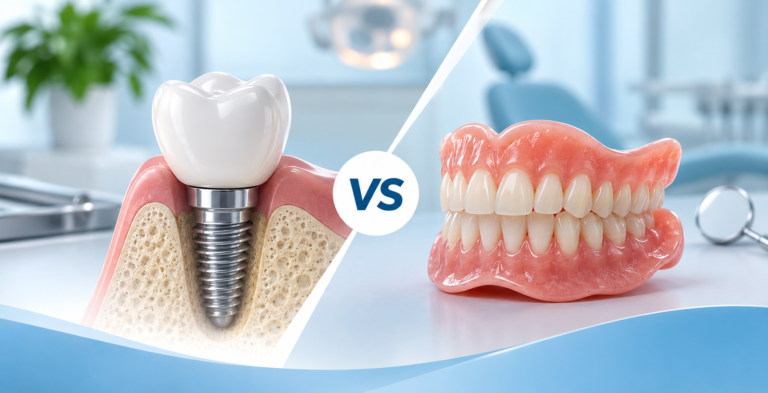
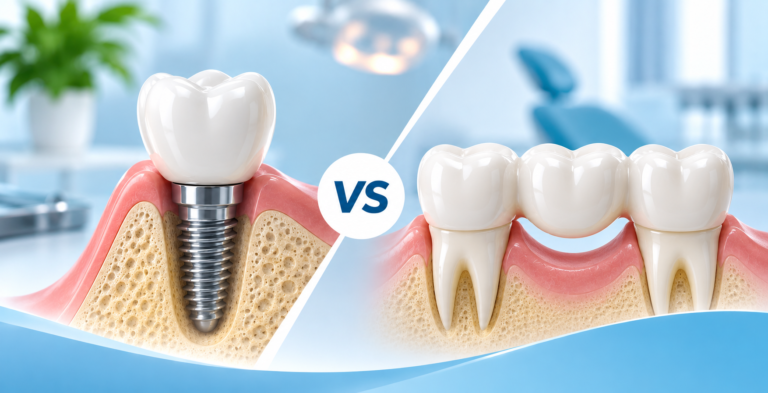
How long do dental implants last compared with other options? A well-maintained implant may remain in place for decades, while the attached tooth can need repairs. A conventional dental bridge depends on supporting teeth and requires careful cleaning around its edges. Removable dentures may need relining or replacement as the jawbone and gums change shape.
For a broader comparison, read our guides on dental implants vs dentures and dental implants vs bridges once those articles are available on the blog. Treatment choice should consider neighbouring teeth, bone levels, comfort, cost and maintenance—not lifespan alone.
Frequently Asked Questions
How Long Do Dental Implants Last After Ten Years?
Ten years is not an automatic replacement point. Implants that are healthy and stable may continue functioning for many more years. The crown or other attached restoration may need maintenance independently of the implant fixture.
How Long Do Dental Implants Last if You Have Gum Disease?
A history of periodontal disease raises the importance of assessment, disease control, and follow-up care. Active inflammation should be treated before implant placement, and ongoing monitoring helps reduce the risk of complications.
Does an Implant Crown Need Replacing?
There is no standard timetable for changing an implant crown. Replacement may be needed because of wear, fractures, changes in appearance,e or problems with the connection. Your dentist can check whether repair is possible without disturbing the implant.
Conclusion
So, how long do dental implants last? Many remain functional for decades, but the result depends on gum health, sound treatment planning, effective cleaning and routine professional checks. The implant fixture and the visible replacement tooth may have different lifespans, so maintenance should be expected.
For individual advice about treatment or caring for an existing implant, arrange a consultation with Crosland Moor Dental Clinic in Huddersfield or call 01484 654438.