Losing teeth can affect eating, speech, and confidence. Replacing them can improve function and appearance, but choosing treatment involves more than how the replacement teeth will look.
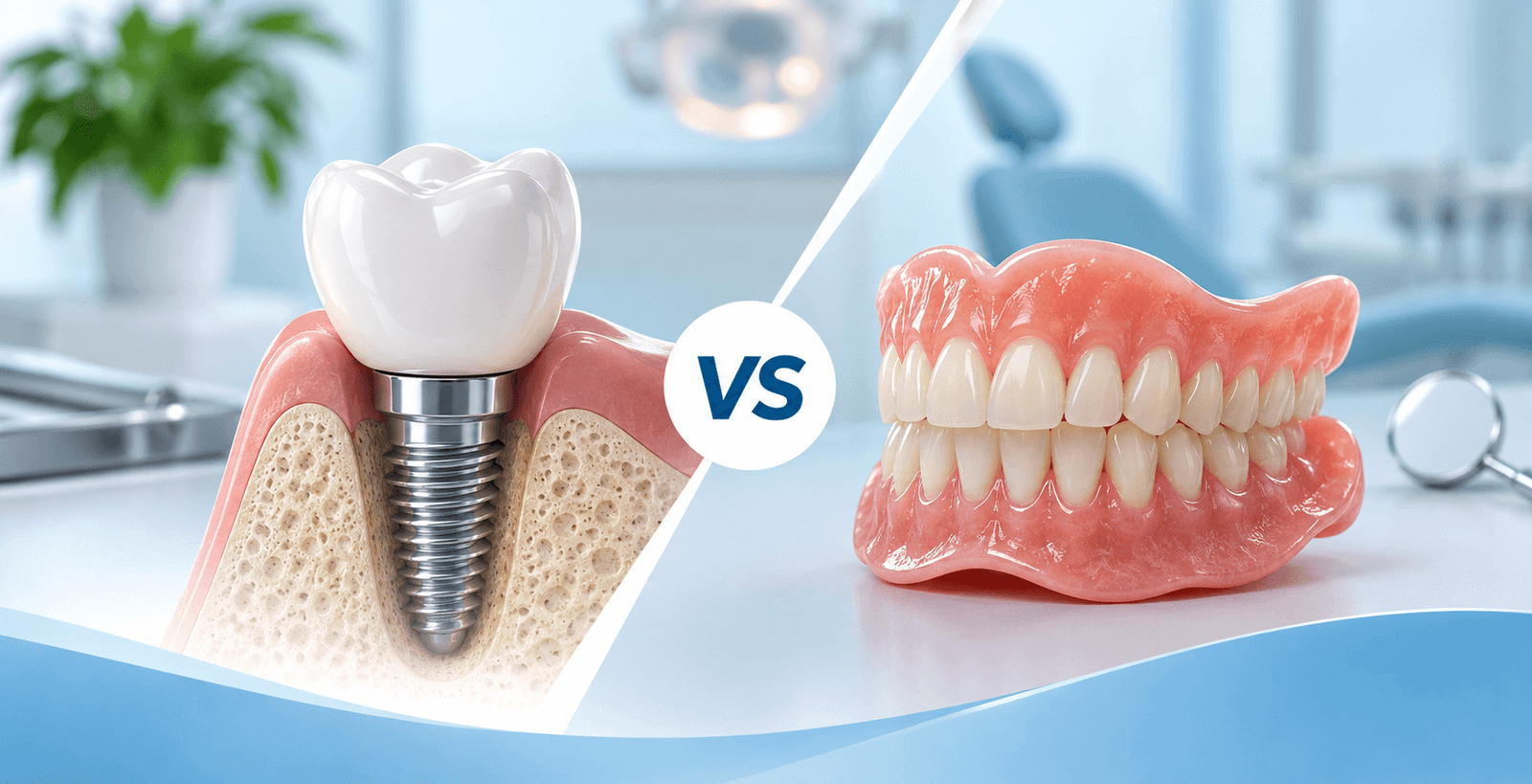
When comparing dental implants vs. dentures, the most important considerations are stability, oral health, treatment time, cost, and maintenance. Both options can work well, although they replace teeth in different ways. Understanding their advantages and limitations will help you have a more informed conversation with your dentist.
What Are Dental Implants?
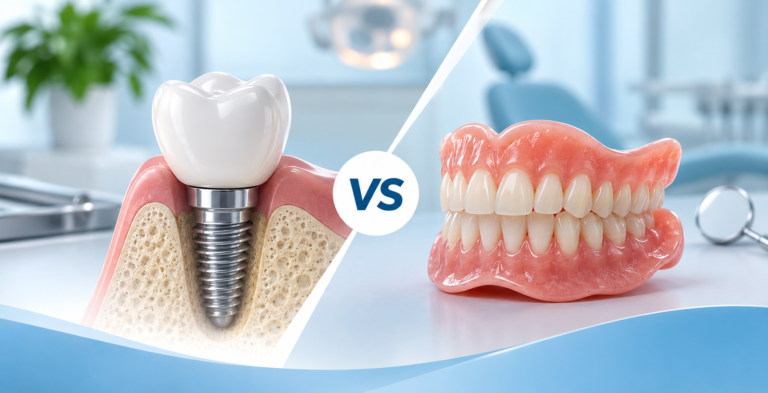
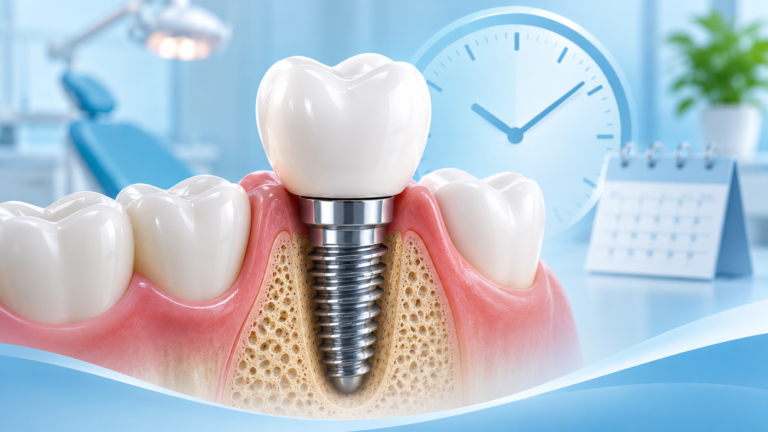
A dental implant is a small, usually titanium, fixture placed surgically into the jawbone. It acts as an artificial tooth root and supports a custom-made crown, bridge, or denture. During healing, the bone integrates with the implant in a process called osseointegration, creating a firm foundation for the replacement.
Implants can replace a single tooth, several teeth or a complete arch, depending on the number and position of missing teeth. A fixed implant restoration stays in the mouth and is cleaned much like natural teeth, although special cleaning tools may be required.
The clinic’s dental implants in Huddersfield page explains its available treatment options and how an assessment can help establish suitability.
What Are Dentures?
Dentures are removable appliances that replace missing teeth and, where needed, some surrounding gum tissue. They usually have artificial teeth attached to an acrylic base; some partial dentures also include a metal framework or clasps.
The main types of dentures are complete dentures, replacing every tooth in a jaw, and partial dentures, filling gaps when natural teeth remain. Conventional dentures rest on the gums, sometimes with support from remaining teeth.
Well-fitting dentures can improve appearance, speech, and chewing. However, getting used to them takes practice, and their fit may change as the gums and jawbone gradually alter shape. The clinic’s dentures in Huddersfield page describes the available options.
Dental Implants vs Dentures: Differences That Matter
Comfort and Stability
In a dental implants vs dentures comparison, stability is a major distinction. Implant-supported crowns are anchored to the jawbone and do not normally move when you talk or eat. Conventional dentures rely on a close fit over the gums. They can be comfortable, but some people experience movement, rubbing, or pressure spots, particularly when a denture becomes loose.
Eating and Speaking
Both treatments can improve eating and speaking. Fixed implants generally provide stronger chewing stability, especially for firmer foods. Denture wearers may need smaller bites or to chew evenly on both sides. Initial pronunciation changes often improve with practice.
Jawbone Changes and Appearance
After a tooth is lost, the jawbone in that area tends to shrink over time. Implants transfer some biting forces into the bone, helping maintain bone around the implant, although they cannot prevent every type of bone loss. Conventional dentures do not replace tooth roots, so changes in the underlying ridge may continue.
Both can look natural. Dentures can also replace lost gum volume and support facial appearance.
How Long Does Treatment Take?
The dental implants vs dentures decision also involves the treatment schedule. Implant planning usually includes an examination and imaging to assess gum health, bone volume,e and the location of nearby structures. Surgery is generally performed under local anaesthetic. Healing and bone integration commonly take several months before the final restoration is fitted, and bone grafting can extend this process.
Dentures usually require impressions or scans, bite measurements, construction, and fitting visits. They can often be made within several weeks. Immediate dentures may be fitted soon after tooth removal, but they often need adjustments as the tissues heal.
Dental Implants vs Dentures: Cost and Long-Term Value
Implants generally cost more initially because they involve surgery, specialised components and a custom restoration. Dentures usually have a lower starting cost, although the total varies with the material, number of teeth and complexity of the appliance.
Long-term costs are also worth considering. Dentures can need relining, repairs, or replacement as the mouth changes. Implant crowns and other components may also require maintenance or replacement. Neither option is entirely maintenance-free.
For local information, the clinic publishes a dental treatment pricing guide. Your dentist can provide an individual estimate after an examination. In England, dentures may be available through NHS dentistry when clinically appropriate; implants are generally provided privately, apart from limited exceptions.
How Long Do They Last?
A common follow-up question is how long dental implants last. Implants may function for decades, but longevity depends on oral hygiene, gum health, smoking, medical factors, and biting forces. The visible crown or attached denture can need repair or replacement even if the implant remains stable.
Conventional dentures can also last for years. However, changes in the gums and jawbone can make them less secure over time. Clicking, slipping, soreness,s or difficulty chewing are reasons to arrange a fit check rather than simply relying on denture adhesive.
Cleaning and Everyday Care
Whatever you choose in the dental implants vs dentures comparison, daily care matters. Implants require careful brushing around the gumline and appropriate interdental cleaning. Regular dental visits help clinicians monitor the surrounding tissues for inflammation and other complications.
Dentures should be removed and cleaned daily using suitable products, with the gums, tongue and remaining teeth cleaned separately. Unless your dentist advises otherwise, dentures should be removed overnight. Toothpaste can be too abrasive for some denture materials, so follow the cleaning instructions supplied with the appliance.
Who Might Benefit Most From Each Option?
When considering dental implants vs dentures, implants may suit patients who want a fixed replacement and have sufficient healthy bone and gums to support treatment. Active gum disease, smoking, uncontrolled diabetes, and some medications can affect risks or healing, so suitability must be assessed individually. A fixed restoration is not automatically the best choice.
Dentures may suit people who prefer to avoid surgery, want a lower initial cost or need to replace many teeth and supporting tissues. They can also be adjusted or replaced as circumstances change.
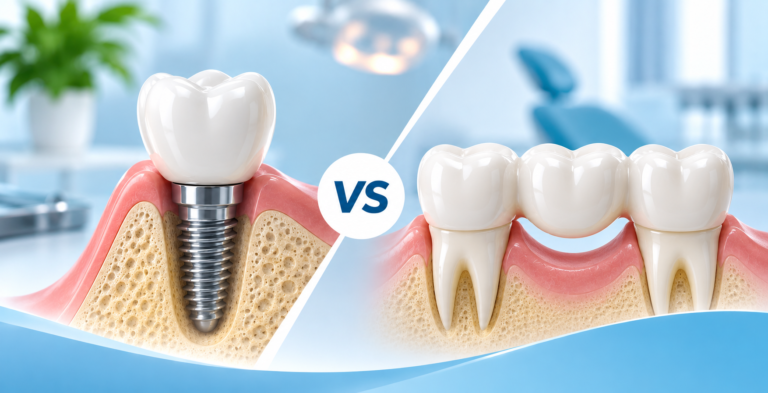
Another alternative is a fixed dental bridge, supported by suitable neighbouring teeth. A future guide to dental implants vs bridges will explain that option.
Need help understanding your options? A dental assessment at Crosland Moor Dental Clinic can review your gums, remaining teeth and jawbone before discussing appropriate tooth replacements. Contact the clinic to ask about an appointment.
Can Dentures Be Supported by Implants?
Yes. Implant-supported dentures combine the replacement of several teeth with additional retention from implants placed in the jaw. Some designs can be removed by the patient for cleaning; others are fixed and require professional removal.
They can reduce slipping but still require suitable bone, maintenance, and follow-up care. Design depends on individual clinical needs.
Conclusion
There is no universal winner in dental implants vs dentures. Implants offer a stable foundation and may help maintain surrounding bone, while dentures provide a removable, usually less expensive way to replace missing teeth. Both require regular care, and both can improve daily function.
For advice based on your own oral health, arrange a consultation with Crosland Moor Dental Clinic in Huddersfield or call 01484 654438.